
The Soo is a can’t-miss destination

By Kelly Hillman, Presque Isle (H-70) Port Captain
Long before Europeans first saw its rushing waters, Sault Ste. Marie — known to the indigenous Anishinaabe as Bawating (“the rapids” or “place of the rapids”) — held deep cultural and practical significance for the Chippewa (Ojibwe) people.
For centuries, this strategic location at the outlet of Lake Superior served as a major summer gathering place and fishing hub. The abundant whitefish and sturgeon in the St. Marys River rapids sustained large communities, while the site functioned as a vital crossroads for trade, ceremony, and social exchange among Anishinaabe bands.
Oral traditions recall it as one of the key stopping places in the great westward migration guided by the sacred miigis (cowrie) shell, where the people found plentiful food and held powerful ceremonies on the small islands amid the rapids. Bawating supported many families and became a cornerstone of Ojibwe life well before the arrival of outsiders.
In 1668, Jesuit missionary Father Jacques Marquette established the Mission Sainte Marie du Sault here, one of the earliest European outposts in the interior of North America. The site quickly became a hub for the fur trade. French voyageurs, followed by British and American traders, paddled through the rapids to exchange goods with Ojibwe communities. Irish-born fur trader John Johnston arrived in 1793, built a trading post and elegant home (still standing today next to Kemp Marina), and married Oshahguscodaywayquay, daughter of a prominent Ojibwe leader. Their household became a center of frontier hospitality and cross-cultural exchange.
The roaring rapids that once forced all cargo to be portaged around them gave way to engineering ingenuity in the 19th century. The first state lock opened in 1855, allowing ships to bypass the 21-foot drop between Lake Superior and Lake Huron. Over time, the Soo Locks grew into a marvel of American infrastructure, moving massive amounts of iron ore, grain, and other commodities that power the nation’s economy. Today, these locks comprise one of the busiest lock systems in the world.
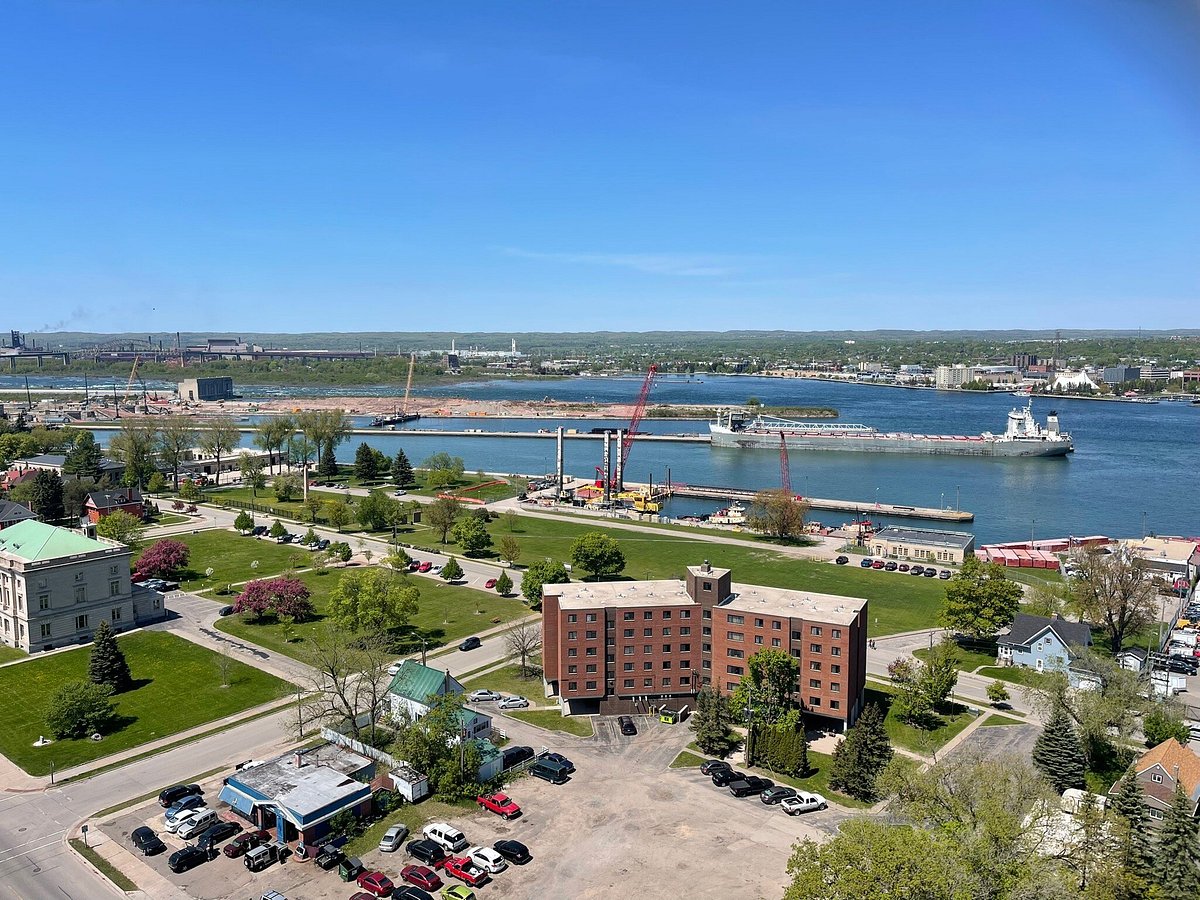
With the Poe Lock now well beyond its design life and handling the vast majority of traffic, a new, larger lock is under construction by the U.S. Army Corps of Engineers. The project, targeted for completion around 2030, will provide critical redundancy. A 2015 Department of Homeland Security analysis underscored the stakes: a prolonged closure of the Poe Lock could idle steel production across the Great Lakes, ripple through supply chains, and affect millions of jobs — making the Soo Locks a clear national security priority.
Mark your calendars: Engineers Day 2026
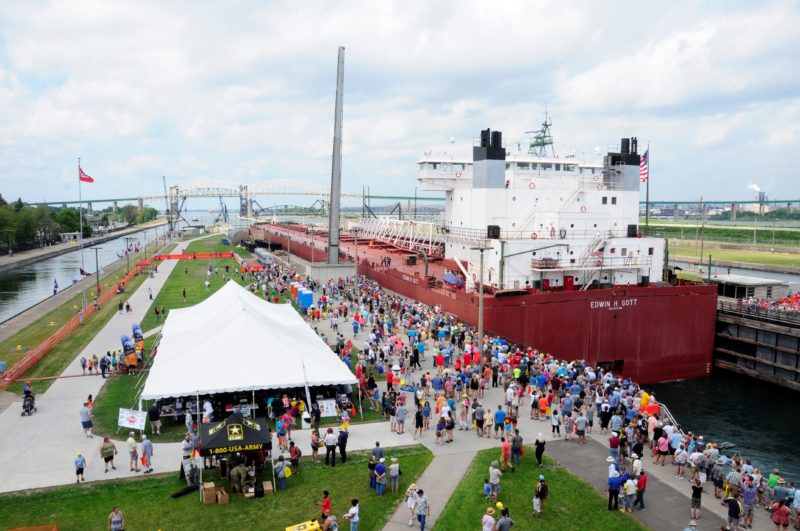
On Friday, June 26, the magic returns with Soo Locks Engineers Day, a beloved celebration that draws thousands to watch up close as the giant 1,000-foot freighters glide through the locks. The park and observation deck will be open from morning until dusk, Portage Avenue will bustle with vendors, and the air will hum with the energy of maritime tradition meeting modern engineering. It’s a perfect day to appreciate the skill, history and sheer wonder of the Soo.
GLCC member rally at the Soo
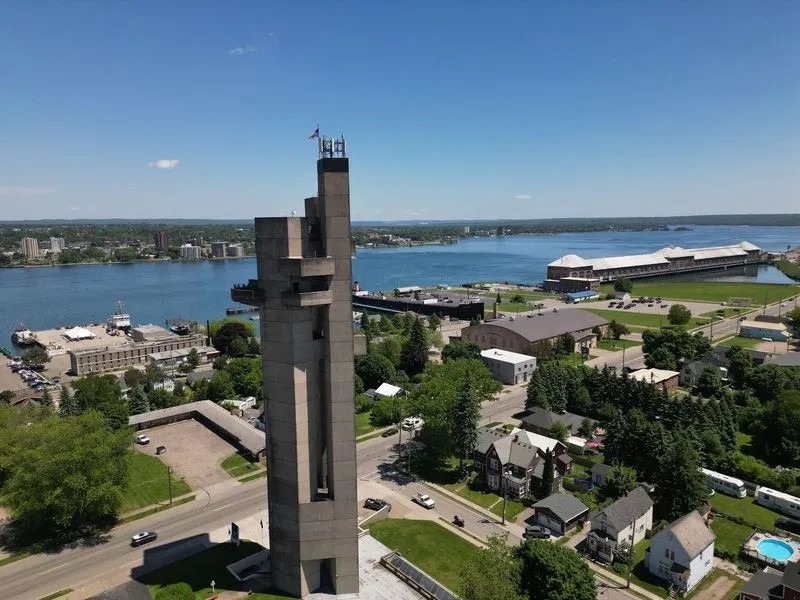
The Great Lakes Cruising Club invites all members to join the Club’s 2026 Soo Rally. Festivities begin Friday, June 26 with a 9 a.m. tour of the U.S. Coast Guard Base Soo, and include a GLCC reception at 6 p.m. at the top of the Tower of History, with 360-degree views of the locks, the St. Marys River, and the International Bridge.
Other weekend highlights:
- The International Bridge Walk on Saturday.
- Museum Ship Valley Camp, with its extensive Great Lakes maritime exhibits.
Come celebrate cruising, history, and camaraderie in one of the most iconic ports on the lakes. Full details and registration: https://www.glcclub.com/glcc-rally-soo. We look forward to seeing you in the Soo — where the past, present, and future of Great Lakes navigation meet in spectacular fashion.
Of course, no history of Sault Ste. Marie and the Soo Locks would be complete without noting their transformative impact on Duluth, MN, the site of the 2026 GLCC Rendezvous.
Before the 1855 locks opened, Duluth’s iron ore and grain sat landlocked behind the treacherous St. Marys River rapids. Ships had to be portaged. Once the locks opened, Duluth turned into the westernmost Great Lakes port, spawning overnight millionaires among ship owners, mine operators and merchants.
Make GLCC’s Duluth/Superior Rendezvous yet another 2026 summer destination. Attend the GLCC 2026 Rendezvous in Duluth July 10-14. Full details: https://www.glcclub.com/2026-rendezvous-duluth-superior