
A new major international bridge connects US, Canada

By Past Commodore Doug Jackson
For decades, nearly all truck traffic between Detroit, MI, and Windsor, ON, depended on the privately owned Ambassador Bridge. This corridor carries one of North America's largest volumes of international trade, making governments worry about relying on a single crossing.
By the early 2000s, Canada, Michigan, and the U.S. federal government began planning a publicly owned alternative. Environmental studies, engineering reviews, and negotiations consumed years before approvals were finally secured.
Political and legal delays (2010–2018)
The biggest obstacle to this new crossing wasn't engineering. It was politics.
The private owners of the Ambassador Bridge strongly opposed a competing crossing and for many years mounted legal and political challenges to it. Funding debates in Michigan, lawsuits, and disagreements over governance repeatedly delayed the project before construction could begin. To resolve the issue, Canada agreed to finance Michigan's share of the project to break the political deadlock and keep it moving.
Ground officially broke in 2018, roughly a decade after serious planning had begun.
Building a record-setting bridge (2018–2025)
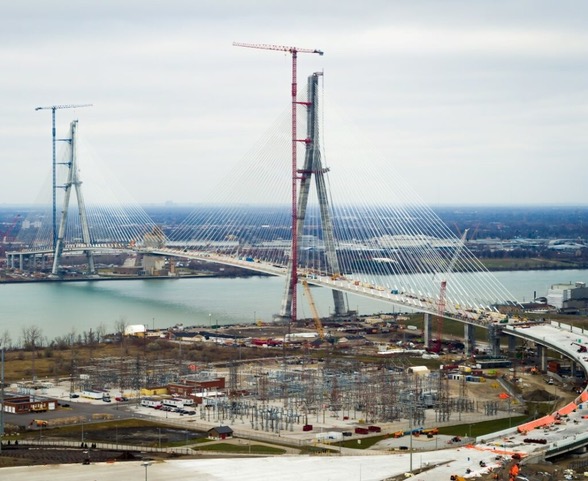
Construction became one of North America's largest infrastructure efforts.
The bridge features:
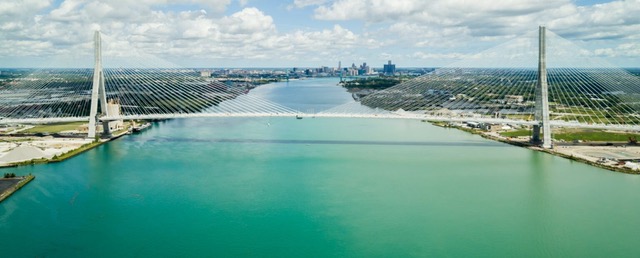
● Main span of 853 meters (2,800 feet)—the longest cable-stayed bridge span in North America
● Two towers approximately 220 meters (722 feet) tall
● Six traffic lanes plus a shared pedestrian and bicycle path
● Massive customs plazas on both sides of the border
At peak construction, approximately 2,300 workers were on site. Thousands more contributed through engineering, manufacturing, steel fabrication, concrete production, transportation, customs planning, and environmental work.
COVID changes everything
Originally, the bridge was expected to open by late 2024. Then COVID-19 hit.
Because the project crossed an international border, it faced unique complications:
● Different public health rules in Canada and the United States
● Travel restrictions
● Supply chain disruptions
● Labor shortages
● Material delays
These challenges pushed the opening back by about 10 months. In early 2024, officials revised the schedule to target Fall 2025.
Costs climb
The project's contract value also increased.
● Initial public estimates were roughly $5.7 billion Canadian
● By 2024, the updated contract value reached approximately $6.4 billion Canadian, largely because of pandemic-related impacts and schedule extensions
Canada financed the bridge, with toll revenues intended to recover costs over time.
A symbolic milestone
One of the most memorable moments occurred on June 14, 2024, when crews completed the final connection of the bridge deck. Canadian and American steelworkers met in the middle of the span and shook hands—a symbolic joining of the two countries after years of work.
More delays
Although construction was largely complete in 2025, extensive testing remained. Officials delayed the opening into early 2026 while systems—including lighting, customs technology, communications, and safety features—were tested and certified.
Political drama before opening
Even after the completion of construction, politics intervened once more. In mid-2026, planned opening ceremonies were postponed while the United States and Canada negotiated issues involving toll revenues and other operational matters amid broader trade tensions. Weeks of negotiations followed before both governments agreed on an opening date.
Bridge finally opens
The Gordie Howe International Bridge officially opened to traffic on July 27, 2026.
The new crossing now provides:
● A direct Interstate 75–Highway 401 connection
● Another major route for commercial trucks
● Improved border resilience
● A publicly owned alternative to the Ambassador Bridge
● A new pedestrian and bicycle crossing
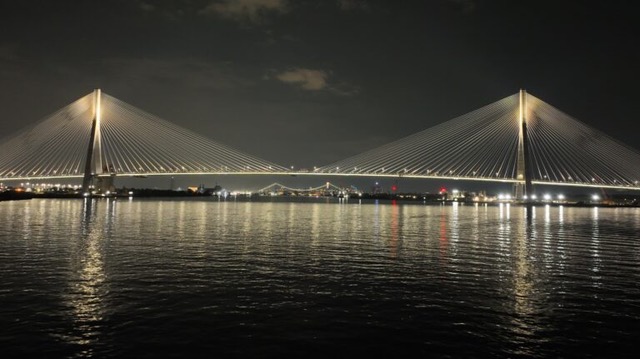
After roughly 20 years of planning, eight years of construction, billions of dollars in investment, thousands of workers, multiple schedule revisions, legal fights, pandemic disruptions, and political negotiations, the bridge finally welcomed its first vehicles.
Timeline at a glance
Year Milestone
Early 2000s Governments begin planning a new Detroit–Windsor crossing
2012 Major governmental agreements finalized
2018 Construction begins
2020–2023 COVID slows progress; supply chain and labor issues emerge
June 14, 2024 Bridge deck connected between Canada and the U.S.
January 2024 Opening moved from late 2024 to fall 2025; project cost updated to about CA$6.4 billion
October 2025 Opening delayed again for testing into early 2026
June–July 2026 Political negotiations delay final opening
July 27, 2026 Bridge officially opens to traffic