
Fall haul-out is the perfect time to check for blistering

By Past Commodore, Doug Jackson
Osmotic blistering is one of the most common — and often misunderstood — problems found in typically older, fiberglass boats. While blisters can look alarming, they do not necessarily mean that a boat has serious structural damage. Understanding what causes them, how to evaluate their severity, and how they should be repaired can help a boat owner make an informed decision.
How blisters happen
Fiberglass boats are constructed primarily from fiberglass reinforcement embedded in a plastic resin, usually polyester or vinylester. Although the finished laminate appears solid and waterproof, small amounts of moisture can eventually penetrate the outer gelcoat and migrate into the laminate (via osmosis).
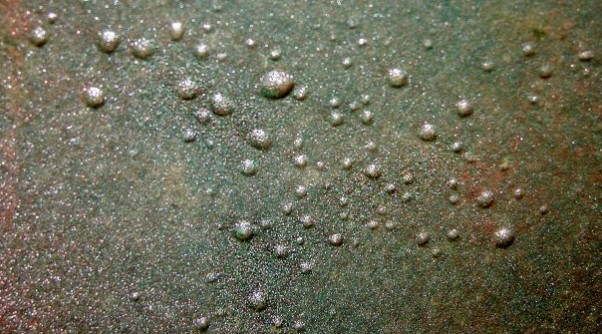
When that moisture encounters certain water-soluble chemicals left over from the manufacturing process, a chemical reaction can occur. This creates an acidic liquid that draws additional water through the surrounding laminate by osmosis. The resulting pressure can produce small bubbles or blisters beneath the gelcoat.
Not all blisters are the same
Blisters can vary considerably in size. Some are only a fraction of an inch across, while others may reach several inches in diameter. They may occur individually or cover substantial portions of the underwater hull. When a blister is opened, it may contain clear, yellowish, or foul-smelling liquid. The smell and contents can provide useful clues about the condition of the laminate.
It is important to distinguish cosmetic blistering from structural problems. A few isolated blisters may have little effect on the strength or performance of a boat. Extensive blistering, however, can indicate that moisture has penetrated deeply into the laminate. In severe cases, the bonding between layers of fiberglass may be affected, potentially reducing the laminate's strength.
What to do about blisters
The first step in dealing with suspected osmotic blistering is careful inspection. A marine surveyor can determine the extent of the problem and may use a moisture meter to identify areas with elevated moisture levels. The hull should also be examined for evidence of delamination or other structural damage.
Minor blistering can sometimes be repaired locally. The affected gelcoat is removed, the blister is opened and thoroughly dried, and the damaged material is ground away. The area is then repaired with appropriate fiberglass and resin before being faired and recoated.
If you have a bigger issue
Extensive blistering requires a more comprehensive approach. In serious cases, the gelcoat may be removed from much or all of the underwater hull. The hull is then allowed to dry — sometimes for months — before repairs and a new protective coating system are applied. Drying is a critical part of the process; simply filling blisters and painting over them without addressing the moisture can result in recurring problems.
Fortunately, modern barrier-coat systems can provide additional protection after repairs. Proper surface preparation and application are essential, and the manufacturer's recommended number of coats and film thickness should be followed.
Don’t panic, but don’t wait
For a boat owner, the key point is that blisters are a condition to investigate, not automatically a reason to abandon a boat. The age of the vessel, number and size of blisters, moisture levels, laminate condition, and estimated repair cost should all be considered. A professional survey can help determine whether the problem is primarily cosmetic or represents a more significant structural concern.
With proper diagnosis and repair, many fiberglass boats suffering from osmotic blistering can be successfully restored and remain in service for many years.