
Cruise by Houghton-Hancock on way to Rendezvous

By Rear Commodore Larry Hunter-Blank
This year’s Rendezvous, July 10 – 14, will be at Barkers Island Marina at the twin ports of Duluth, MN (S-187), and Superior, WI, on the western end of Lake Superior. Getting there will present some fantastic cruising options for those coming from the eastern shore of the lake or other lakes beyond.
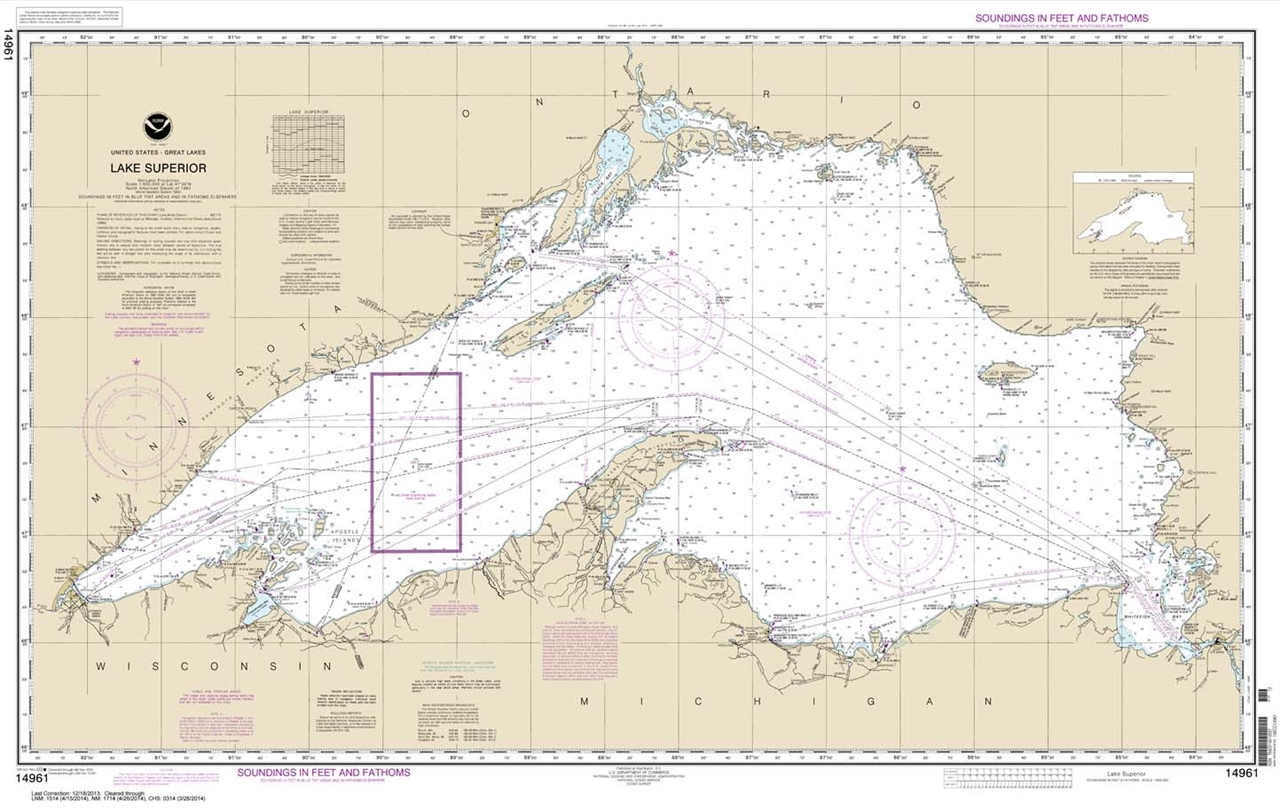
For those choosing to cruise along the southern shore of Lake Superior, choices still abound. One may choose to travel around the Keweenaw Peninsula or through it.
The peninsula is bisected by the Keweenaw Waterway, a partly natural, partly artificial waterway serving as a canal. The north side of the canal is known locally as Copper Island. The cities of Houghton (pronounced Ho-ton), the peninsula's largest population center, and Hancock, are located along the shores of the waterway.
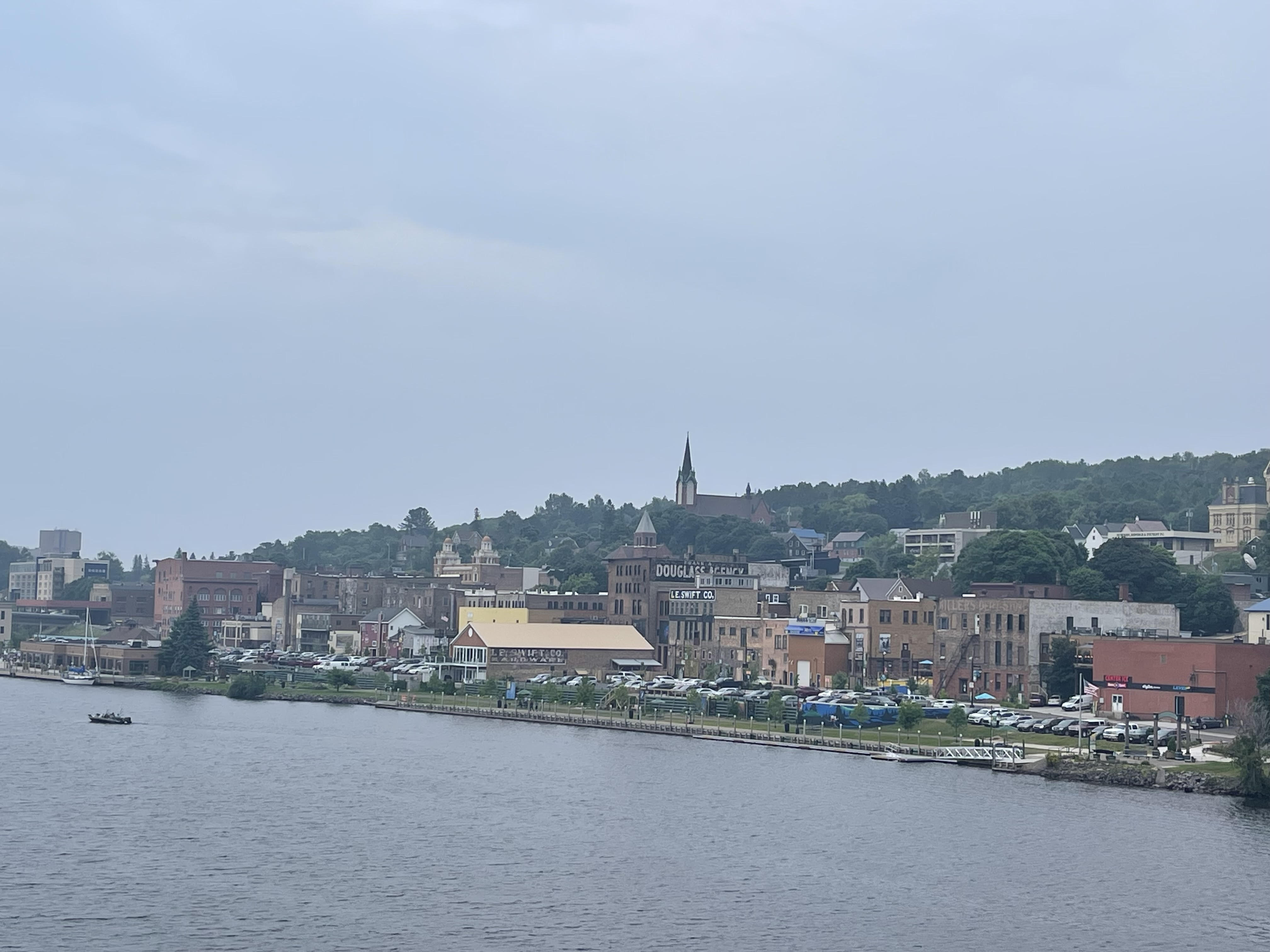
The Keweenaw's rich deposits of copper (and some silver) were extracted on an industrial scale beginning around the middle of the 19th century. The industry grew through the latter part of the century and employed thousands of people well into the 20th century. Hard rock mining in the region ceased in 1967 though copper sulfide deposits continued for some time after in Ontonagon.
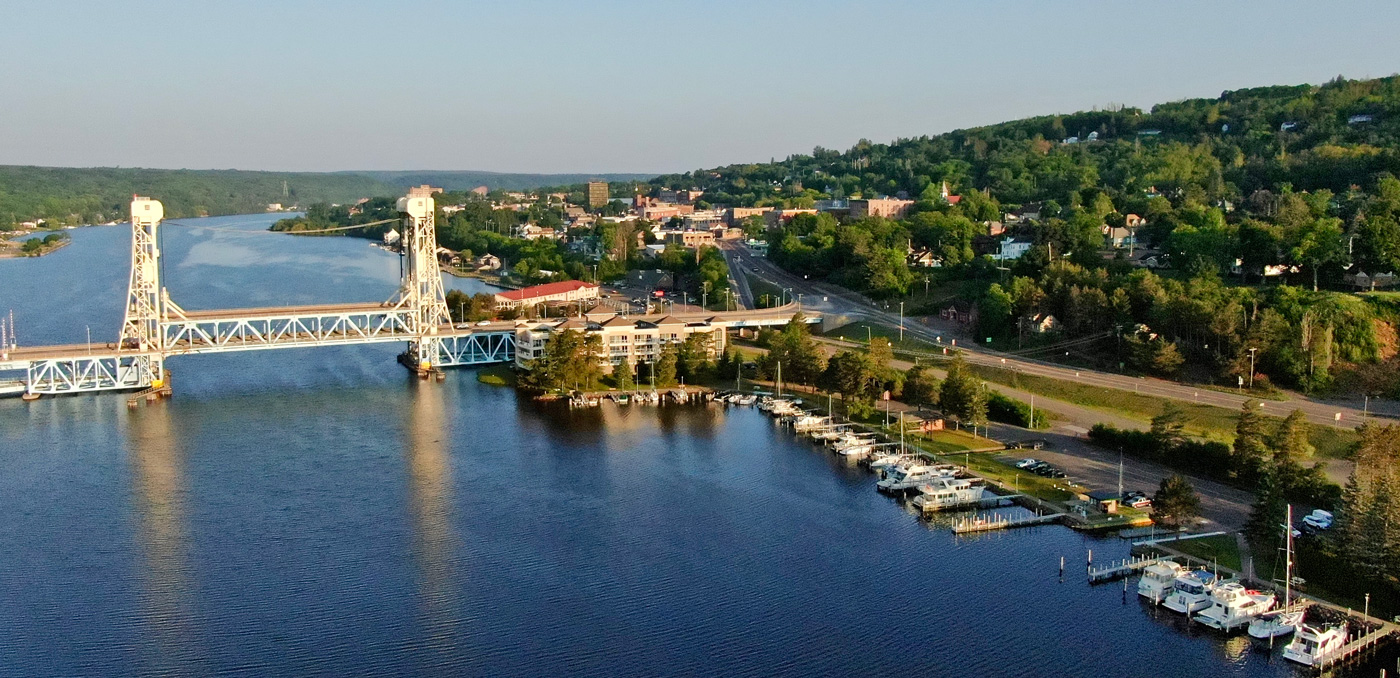
When traveling by water, you know you have arrived into the town with the unquestioned landmark of the area, the Portage Lake Lift Bridge (officially the Houghton–Hancock Bridge) that connects the towns of Houghton and Hancock.
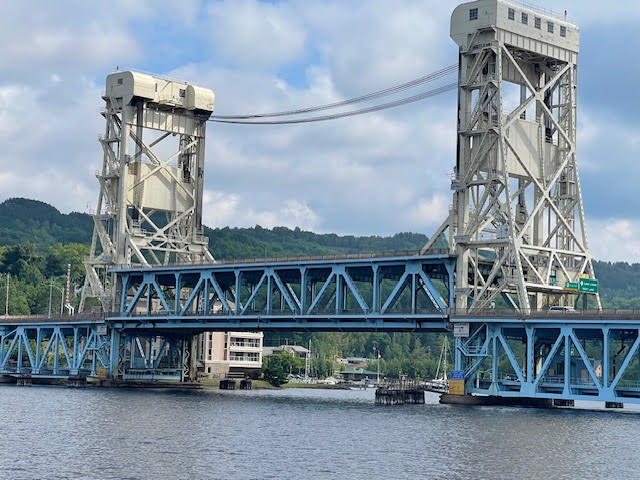
The bridge’s middle section is capable of being lifted from its low point of four feet clearance over the water to a clearance of 100 feet to allow boats to pass underneath. The bridge is the world's heaviest and widest double-decked vertical-lift bridge. More than 35,000 tons of concrete and 7,000 tons of steel went into the bridge, which replaced the narrow 54-year-old swing bridge, declared a menace to navigation on the busy Keweenaw Waterway.
Houghton also was the birthplace of professional ice hockey in the United States when the Portage Lakers were formed in 1903.
Many Cornish and Finnish immigrants arrived in the Houghton area to work in the copper mines in the mining boom that made Copper County; both groups have had a great influence on the culture and cuisine of the local area.
We traveled to Houghton during a trip to Lake Superior in the summer of 2025. We were eager to check out the town because a friend of ours back home grew up in the area. He made several recommendations on how best to enjoy the town.
While most recommendations seemed to revolve around food, not an unwelcome addition to our travel plans, they all seemed to focus on the rich Cornish and Finnish heritage.
Our first stop was Roy’s, a wonderful bakery that specializes in pasties. The pasty is a traditional meat and vegetable pie that has sustained miners, families, tourist businesses and community life in Michigan’s Upper Peninsula since the 1860s.
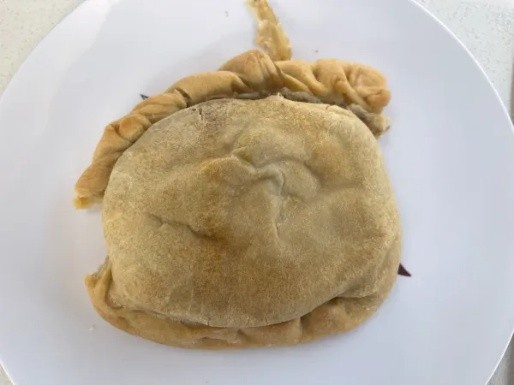
The pasty is a generic term for a D-shaped pocket of pastry dough filled with meat and vegetables. The filling may consist of beef, pork, chicken or venison. Some dispute what ingredients constitute an “authentic” pasty; however, many pasty recipes suggest vegetables such as potato, carrot, onion, turnip or rutabaga. They are lightly seasoned and baked to retain a savory, chunky texture.
We also sampled several of the local micro-breweries along with an outstanding breakfast spot, Suomi. This restaurant primarily serves a Finnish-oriented breakfast. Our friend had recommended we try its Finnish Toast (think French toast, but with a Finnish bread) and pannukakku – a custard filled pancake with raspberry sauce. We also had their omelet. All were delicious.
Our town tour included several shops and an interesting bookstore. A stop we failed to make on this trip, given our limited time, was the Quincy Mine Tour. The Quincy Mine lets guests step back in time to the copper boom that swept through the area starting in the early 1840s. The site offers a 2 ¼ hour tour of the mine.
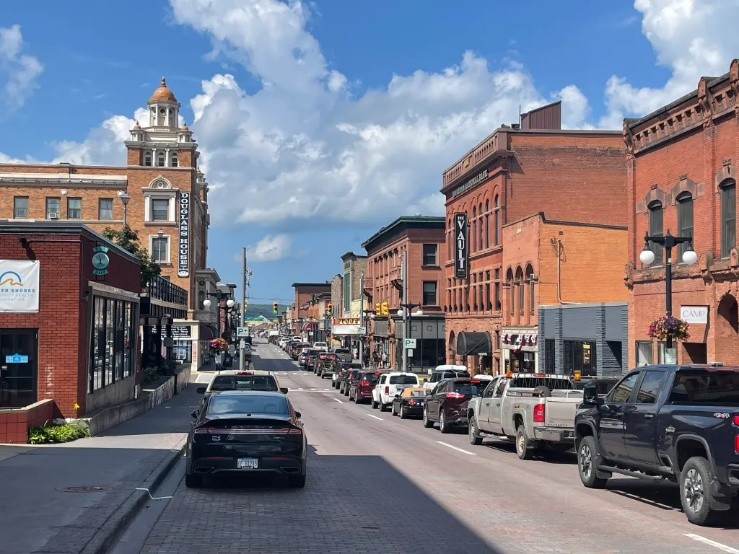
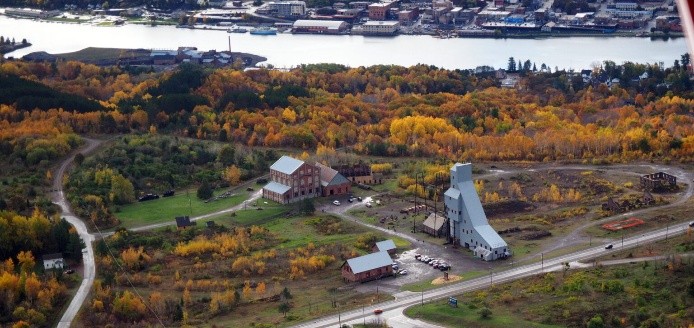
The Great Lakes Cruising Club’s Harbor Report (S-200 Houghton-Hancock) offers some wonderful details about the twin towns, marina choices, restaurants and other activities of which one may take advantage. Be sure to check it out.
Other attractive stops while making your way in or out of Houghton along the southeastern coastline of Lake Superior include the Michigan sites of Marquette, Munising, Grand Marais and Whitefish Point.
Between Munising and Grand Marais is the Pictured Rocks National Lakeshore. It is America’s first National Lakeshore, designated as such in 1966. It extends for 42 miles along the shore of Lake Superior and covers 73,236 acres (114 square miles). The park has extensive views of the hilly shoreline with picturesque rock formations, waterfalls and sand dunes.
Pictured Rocks derives its name from the 13 miles of colorful sandstone cliffs northeast of Munising. The cliffs reach up to 200 feet above lake level. They have been naturally sculptured into a variety of shallow caves, arches, and formations resembling castle turrets and human profiles.
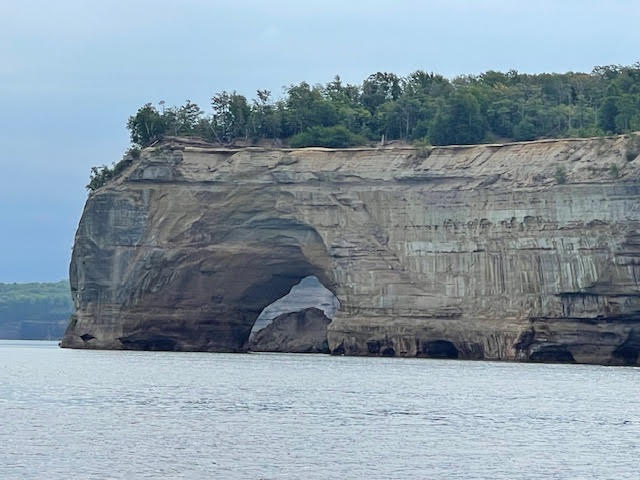
The colors in the cliffs are created by the large amounts of minerals in the rock. Streaks on the face of the cliffs come from groundwater leaching out of the rock and evaporating, leaving streaks of iron (red), manganese (black-white), limonite (yellow-brown), copper (pink-green), and other minerals.
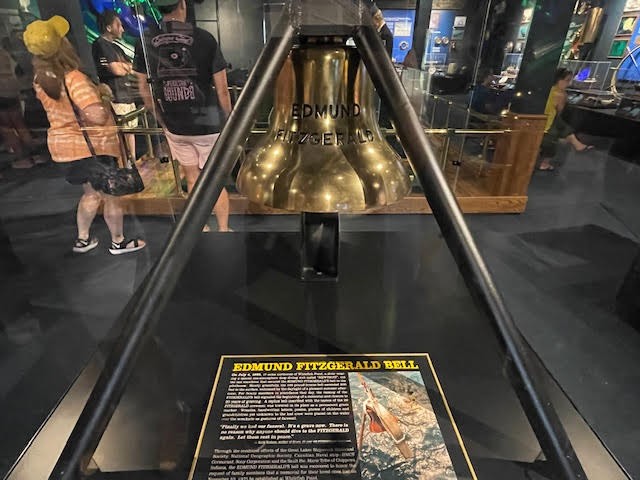
While in Whitefish Point, be sure to check out the Great Lakes Shipwreck Museum. Among its many artifacts is the bell from the Edmund Fitzgerald.
In all, the southern shore of Lake Superior and Houghton is well worth a visit, especially while making your way to Duluth and Superior for this year’s Rendezvous.